
Major League Profits
States and cities take on price gouging in sports


Welcome to You’re Probably Getting Screwed, a weekly newsletter and video series from J.D. Scholten and Justin Stofferahn about the Second Gilded Age and the ways economic concentration is putting politics and profits over working people.
Note: Sorry we have been MIA for a couple of weeks, session has had JD and I tied up a little bit.
“Especially in our community, the Black and Brown community, I feel like baseball’s kind of turned into a country club sport.” That sentiment was shared a couple years ago by Hall of Famer CC Sabathia, a product of working-class Vallejo, California. While Sabathia was talking about the corporatization of youth sports and the inequity of access it creates, it applies equally to the experience of attending a professional baseball game.
This week marks the opening of the 2026 Major League Baseball (MLB) season, which comes fresh off the heels of Venezuela’s victory in a World Baseball Classic (WBC) that shattered attendance records. Not to mention last year’s thrilling World Series, which attracted over 51 million viewers across the globe. Baseball might no longer be America’s favorite sport, but the reports of its death are greatly exaggerated. That said, MLB does everything it can to follow in the footsteps of the broader economy and jeopardize its future to maximize short-term profits. Baseball, like most pro sports, increasingly resembles our K-shaped economy where the average person is being squeezed out in favor of the wealthiest whose pockets grow ever deeper. This was a main theme behind The American Prospect’s recent special edition on the business of sports, which in part details how damn expensive being a sports fan has become.
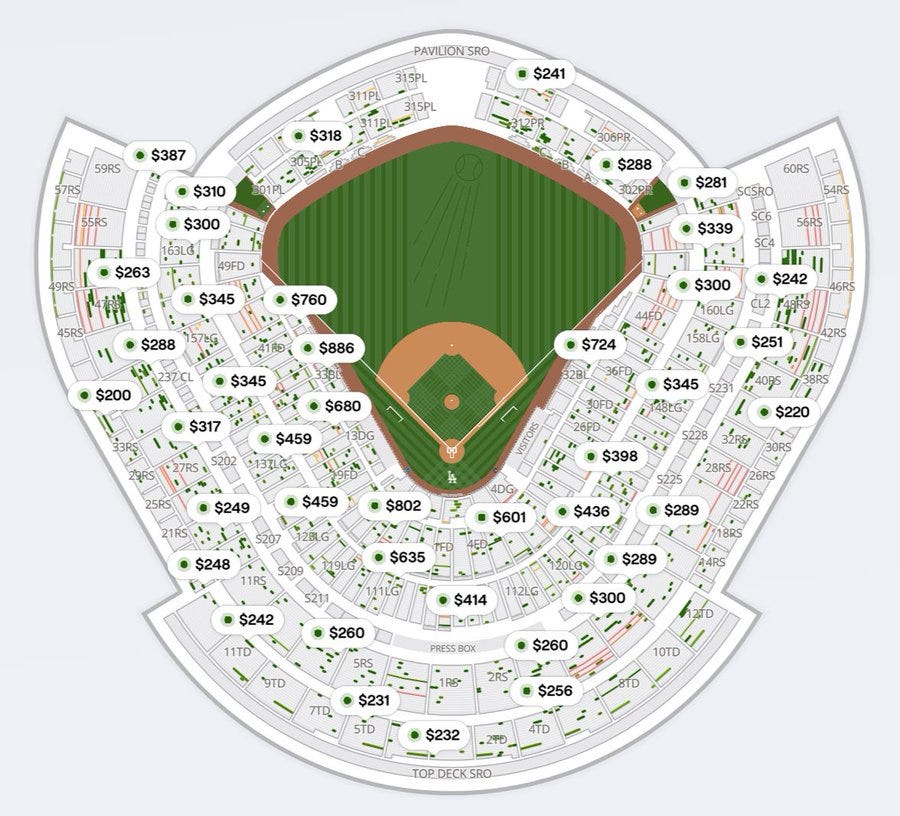
Above are current resale ticket prices on SeatGeek to attend the Los Angeles Dodgers home opener on Thursday evening. If you want the back row in the highest level in the park, you have to fork over $232! A person! According to data from baseball researcher Doug Pappas, the average ticket price for a Dodgers game in 1958 (their first year in LA) was a little over $23 in today’s dollars. Last season the median ticket price for a Dodgers game was $171. LA is not alone here, the average ticket price of a major league game in today’s dollars was $21.60 in 1958. Last year, according to the ticket reseller Gametime, the median MLB ticket price ranged from $44 to $181.
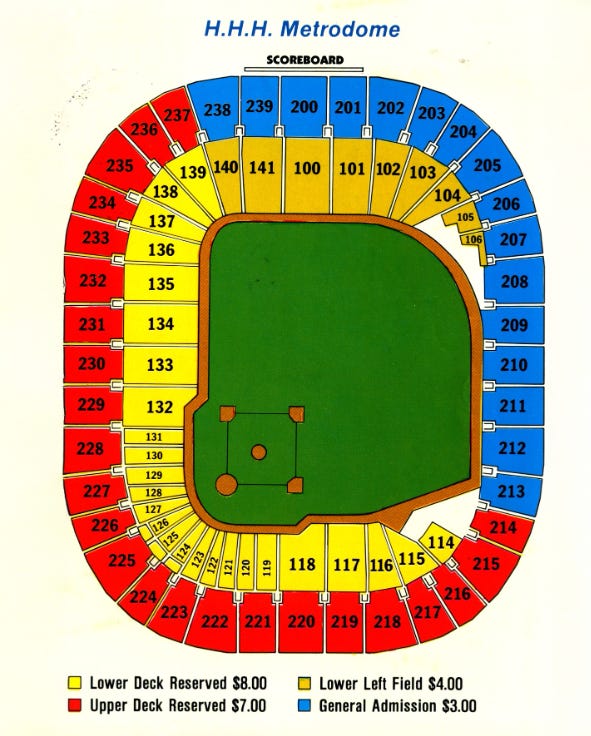
The resale market, particularly for high profile games, can be even crazier. Resale tickets to the 2025 World Series games in Toronto started around $1,500 and some resale prices went as high as $12,000 with over $2,000 in fees. Ticketing has also become more complicated. Consider the seating chart below for the Minnesota Twins in 1984 which had just four ticket tiers that ranged from about $10 to $25 in today’s dollars. These days teams have a vast array of different seating areas that can have multiple ticket prices per section depending on the row you sit in. Those prices are also dynamically priced, changing with the day of the week and the matchup.
This moves baseball further away from its working class roots. In its early days it was a leisure activity for laborers, immigrants, and factory workers in urban industrial areas. Early stadiums like Fenway Park, Wrigley Field, the Polo Grounds and Ebbetts Field were built in dense urban areas that were walkable and in close proximity to public transit. To be clear, baseball’s ruling class has always wanted to make a buck, but they knew their customers were working class families that could only stretch their wallets so far. There were no luxury boxes or price-gouging bots. However, just like we do not have to settle for an economy controlled by oligarchs hell-bent on squeezing every last penny from us, the same is true of baseball, pro sports more generally, and entertainment broadly.
Last week in Minnesota a committee approved bipartisan legislation to cap the resale price of concert tickets in Minnesota to 115 percent of the original price of the ticket (it should include professional sporting events). In Colorado a group of Democrats introduced legislation (that was defeated in committee earlier this month) that would have declared it a deceptive trade practice for vendors at certain events (such as a ballgame or concert) to charge 10% above the average price for similar food and drinks in the surrounding county. This is consistent with efforts to require “street pricing” for concessions since fans become captive consumers the moment they step into a venue.
New York City Mayor Zohran Mamdani has called out FIFA, international soccer’s governing body, for the outrageous ticket prices for World Cup Soccer games. The mayor has called for an end to dynamic pricing, a cap on resale prices, and setting aside 15% of tickets for local fans at a discount. To take the concept a step further, states should consider requiring any team playing in a publicly-funded stadium (nearly all of them) to make 15% of tickets available for $10 or less, at least in baseball where teams have 81 home games and the league enjoys an antitrust exemption. Policymakers should think about pro sports teams as a sort of natural monopoly and treat them like we treat public utilities (well, at least the way we are supposed to treat public utilities).

While making entertainment more affordable for families might not rank as a top tier affordability issue, it is one step toward a broader affordability agenda that actually brings down prices. For the last several decades policymakers and the public have been told they have little control over “market forces” and in turn have abandoned the project of creating fairer markets. If lawmakers can take on pro sports ticketing woes, the next step is addressing the unfair pricing practices driving up costs across the economy. So as you take in the first pitch this week, ask your legislator to do something to make it more affordable.
YOU’RE PROBABLY (ALSO) GETTING SCREWED BY:
Gambling
The hypocrisy of how professional sports leagues have handled the explosion in sports gambling was on display last week. Back in December Major League Baseball (MLB) alongside the Major League Baseball Players Association (MLBPA) - the players union - sent a letter to players prohibiting them from engaging with baseball event contracts on platforms like Kalshi and Polymarket. These are so-called prediction market platforms where people can gamble on everything from trade rumors to which country President Trump will start a war with next.
However, what is good for the goose is not apparently good for the gander because while players must stay away from prediction markets, team owners can slide right in. Last week MLB announced a new exclusive partnership with Polymarket that will give the platform the exclusive rights to use MLB marks and logos and official league data for baseball-related bets. Oh sorry, I mean “prediction contracts.” MLB Commissioner Rob Manfred signed the partnership in conjunction with a new memorandum of understanding (MOU) with the new chair of the Commodity Futures Trade Commission (CFTC), Michael Selig.
Selig, a crypto shill that shares President Trump’s vision of making America the crypto capital of the world, has been working to block any state regulation of prediction markets by asserting the CFTC is the exclusive regulator of these event contracts. This includes asserting that sports-related event contracts do not constitute sports gambling, which is the hook states are using to try and provide some oversight. Selig claimed the CFTC will be a “strong cop on the beat” at an event with Manfred announcing the MOU with MLB, but the Trump Administration has done little to show they will do anything to reign in corporate fraud and abuse.
Ticketmaster
Speaking of high ticket prices, in case the Trump Administration had not sent a strong enough signal that corporate crime is practically welcome in America these days, enter its stunning Ticketmaster settlement. Just a week after the Department of Justice’s monopolization suit against Ticketmaster-Live Nation (maybe the most universally loathed company in the country) went to trial, DOJ settled for basically nothing. However, while the DOJ and some of the 40 states that were on its lawsuit have backed off, most of the states are moving forward with the trial and have hired one of the best antitrust lawyers out there to lead the case. You can find a great rundown of what has happened and what seems to be coming at Who Shall Rule, Ron Knox’s fantastic Substack.
“Anyway, ha ha, what a shitshow it’s been for Live Nation and Ticketmaster so far. Couldn’t have happened to a nicer company.” - Ron Knox at Who Shall Rule
Youth Sports
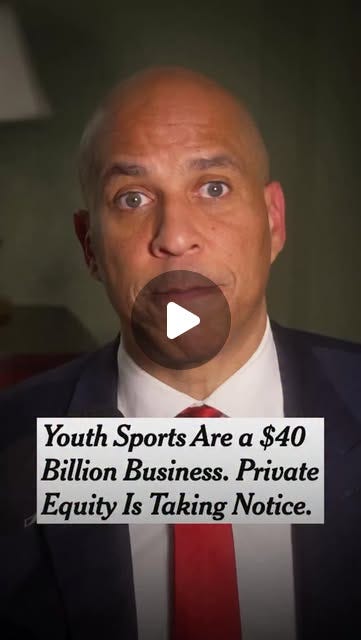
To CC Sabathia’s quote at the top, New Jersey Senator Cory Booker shares his thoughts on the skyrocketing costs of youth sports and private equity’s growing role in driving them ever higher.
Hospital Monopolies
Last week Sutter Health - a health system that dominates northern California - announced plans to acquire Allina Health, a large system in Minnesota and Wisconsin. Sutter has been accused of using anticompetitive tactics to drive up costs for Californians, having paid settlements of $575 million and $228 million. Allina, which has been accused of creating “factory-style” conditions for medical providers, is so bad that its doctors created the first physicians union in the state’s history. The combined $26 billion Sutter-Allina system would have 39 hospitals serving around 5 million patients in California, Minnesota and Wisconsin. Fortunately, in 2023 Minnesota passed a law granting the Attorney General stronger authority for reviewing massive healthcare mergers, so this combination should be anything but a certainty.
Loyalty Programs
Artificial Intelligence
The White House has released a new action plan on AI that continues the Trump Administration’s efforts from last year to create a broad preemption on state regulation of AI. So much for federalism huh. As we discussed last year, this sort of preemption would not only impact state efforts to ensure data privacy for children, but also things like prohibiting surveillance pricing or algorithmic price-fixing.
JBS
Over 3,000 workers at a JBS plant in Colorado have gone on strike. The Brazilian meat giant is a terribly corrupt and destructive company.

SOME GOOD NEWS
Minnesota takes on vertical integration
JBS is uniquely terrible, but they are not the only bad actors in the industry. The Minnesota House Agriculture Committee unanimously approved legislation last week that would prohibit large retailers (think Costco and Walmart) from owning meat processors. The legislation comes as both Costco and Walmart have taken initial steps into this kind of vertical integration. The bill highlighted the broad support antimonopoly measures can generate with the United Food and Commercial Workers (UFCW), Minnesota Grocers Association and my employer, Minnesota Farmers Union, all testifying in support of the legislation.
California introduces based antitrust reform
State Senator Scott Weiner recently introduced the Blocking Anticompetitive Self-preferencing by Entrenched Dominant (BASED) Act, which would prohibit any digital platform with a market capitalization greater than $1 trillion and serving 100 million or more monthly users in the U.S., from favoring their own products and services on the platforms they operate. The bill generated the support of some of our favorites including former Biden antitrust chief Jonathan Kanter and the writer Cory Doctorow, among others.
BEFORE YOU GO
Before you go, I need two things from you: 1) if you like something, please share it on social media or the next time you have coffee with a friend. 2) Ideas, if you have any ideas for future newsletter content please comment below. Thank you.
Break Em Up,
Justin Stofferahn
It's not just sports and it's not just major league. Have you checked out the price of college games lately? They said this morning the cheapest ticket for the Iowa Nebraska basetball game is $531. How many people ( including struggling students) can afford that? Taking the family; not likely. That's more than most people's monthly food budget. The price of supporting your favorite team/ artist is getting pretty high and cuts out many especially those with a fixed income or limited budgets., a big family. Entertainment is becoming more and more something else only for the wealthy and that's sad. My grandkids will never know the pleasure of sitting around on a blanket watching sports or bands. with a weekend pass. We really did live in the best times and didn't know how good it was until it was just a memory
You didn't even mention streaming channel costs. And how the MLB regional teams games are always blacked out! Who wants to watch a Rangers-Rockies game if the Cards-Cubs are on???